Creating Lifelong Learners, One Child At A Time.
Early Connections supports the success of young children and their families through leadership, advocacy, and quality programs in early care and education.
-
EC administers a variety of programs for those looking to get involved in childcare or receive funding! Our goal is to make childcare accessible to all and help all childcare centers thrive.
Take a look. -
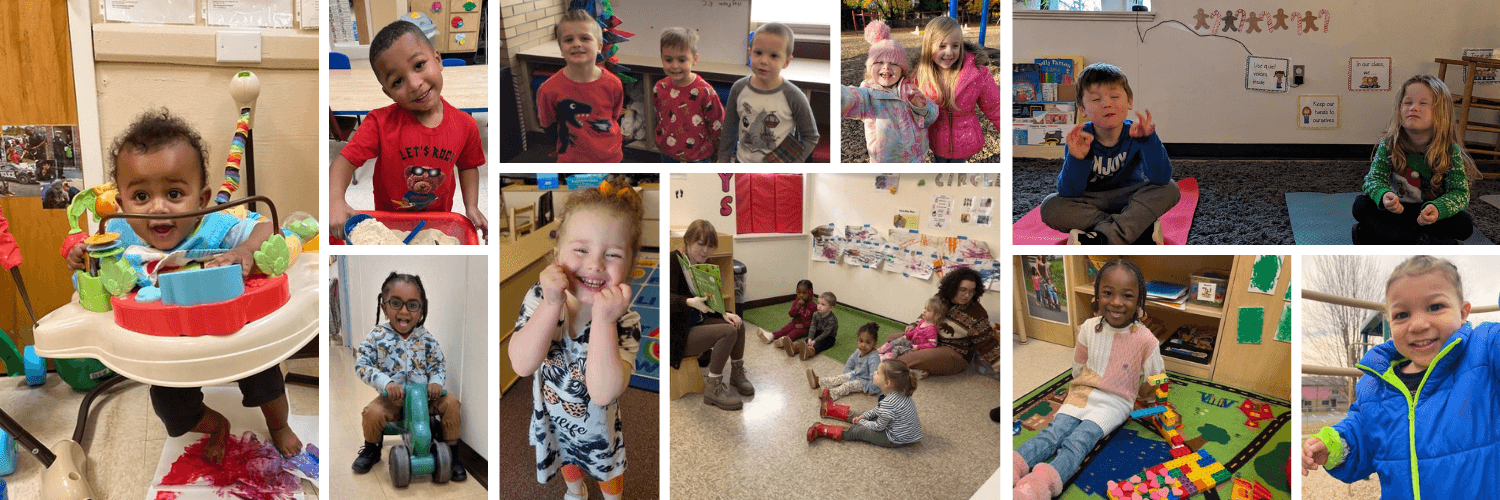
We have 4 locations offering a variety of childcare options! From infant-toddler care to school age care! Find a location that works for you.
Find out more. -

Improve your community by donating or purchasing an item from our Amazon Wish List. Your support goes a long way! You can also follow us on social media for added support!
Read more.
Now Accepting Pre-K Counts Applications
Do you have a pre-school aged child? Are you looking for a way to help your child prepare for their first years of school? Consider enrolling your child in the Pre-K Counts program, a Pennsylvania initiative intended to help children prepare for kindergarten and beyond. Pre-K Counts is free for children between the age of 3 and younger than the entry age for Kindergarten in their home school district, and whose family annual household income falls at or below 300% of the federal poverty level ($96,450 for a family of four).
We're Hiring!
We are currently seeking friendly early childhood teachers and assistant teachers! Full and part time positions provide for the well-being and instruction of the children and help with the day to day operations of the classroom. Bachelors or Associates degree in ECE or related field and/or experience preferred.
Send resume to: Monica Stanford, VP of Employee and Grant Management, 200 West 11th Street Erie PA 16501
or Email: mstanford@earlyconnectionserie.org
-
Pre-K Counts Children
132
-
Family Support Children
17
-
Food Pantry Families
12
-
ITCS Participants
24
The 2022-2023 fiscal year brought in many helping hands to support the growth and develop of children and families in our community. We look forward to helping more in the years to come across all our programs!
News & Blog
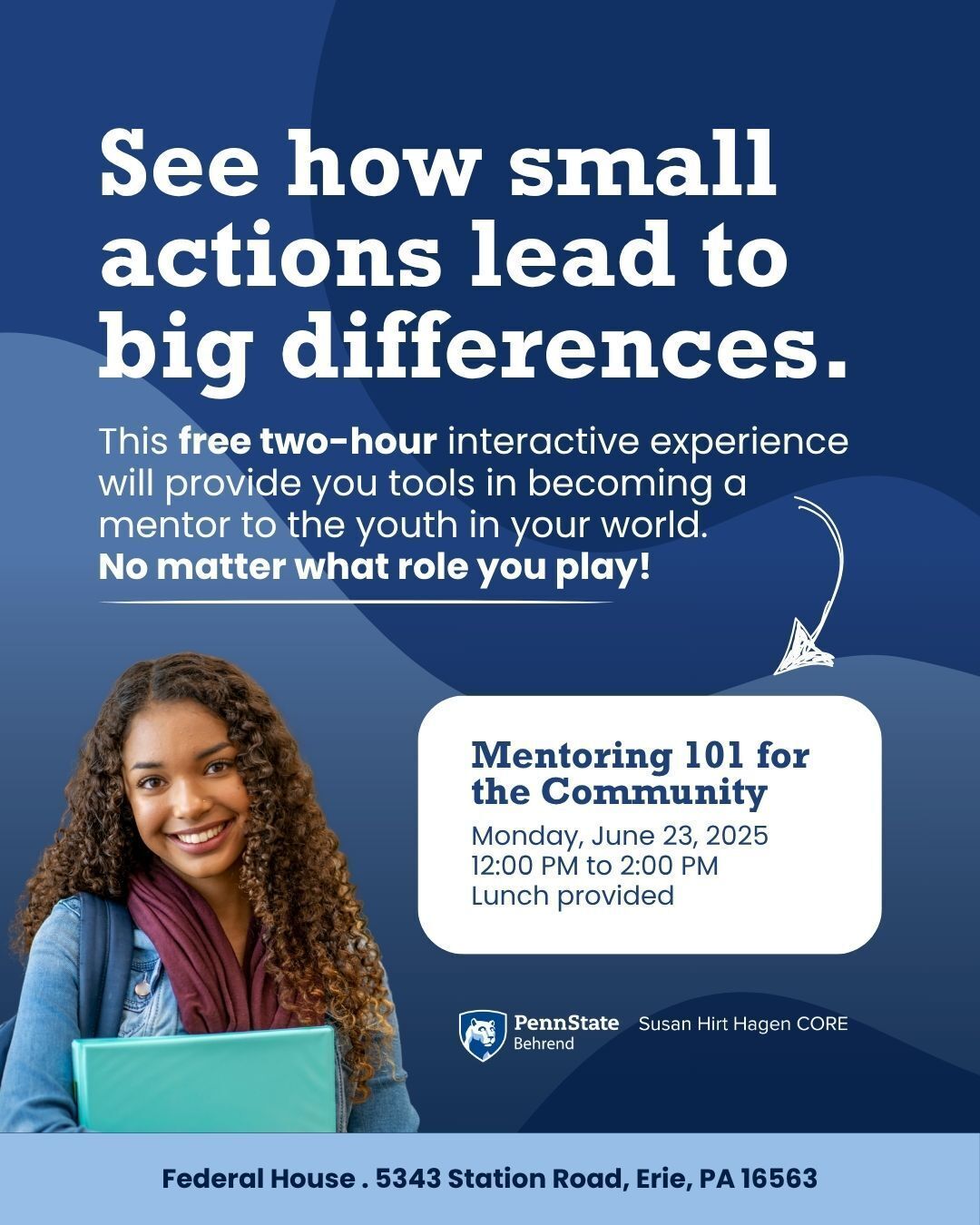
Every young person in Erie County deserves someone in their corner.
Someone who listens. Believes. Encourages. That someone could be you.
Mentorship 101 is your first step toward discovering how any caring adult, a neighbor, barber, teacher, bus driver, librarian, store clerk, or coach, can make a life-changing impact on a young person’s life.
What does mentorship really look like?
How can small actions lead to big change?
Where can you plug in locally and make a difference?
Register Today: https://core.psu.edu/event/mentoring-101-for-the-community/
Let’s build a stronger Erie County — one relationship at a time.

No matter how old you are, what your musical taste is or whether or not you can read a note, there’s never a wrong time to learn how to play an instrument.

While it might seem simple to say talents can help others, actually identifying your talents and putting them to good use can be a little bit more difficult.

We have the best motivational tips and tricks to keep you motivated for the end of the school year. Don’t give up yet—stay encouraged with these easy ideas.
-
 Shaina K. McKinney
"I am amazed by the academic and social progress my daughter had made since attending Early Connections! . . . She loves school and I am grateful for her amazing teacher and the wonderful staff at the center! I appreciate the hard work, time, and patience it takes to shape those little minds! I now see why it is called Early Connections because the relationships she has formed will leave a lasting imprint and set a solid foundation for new friendships in the years to come!"